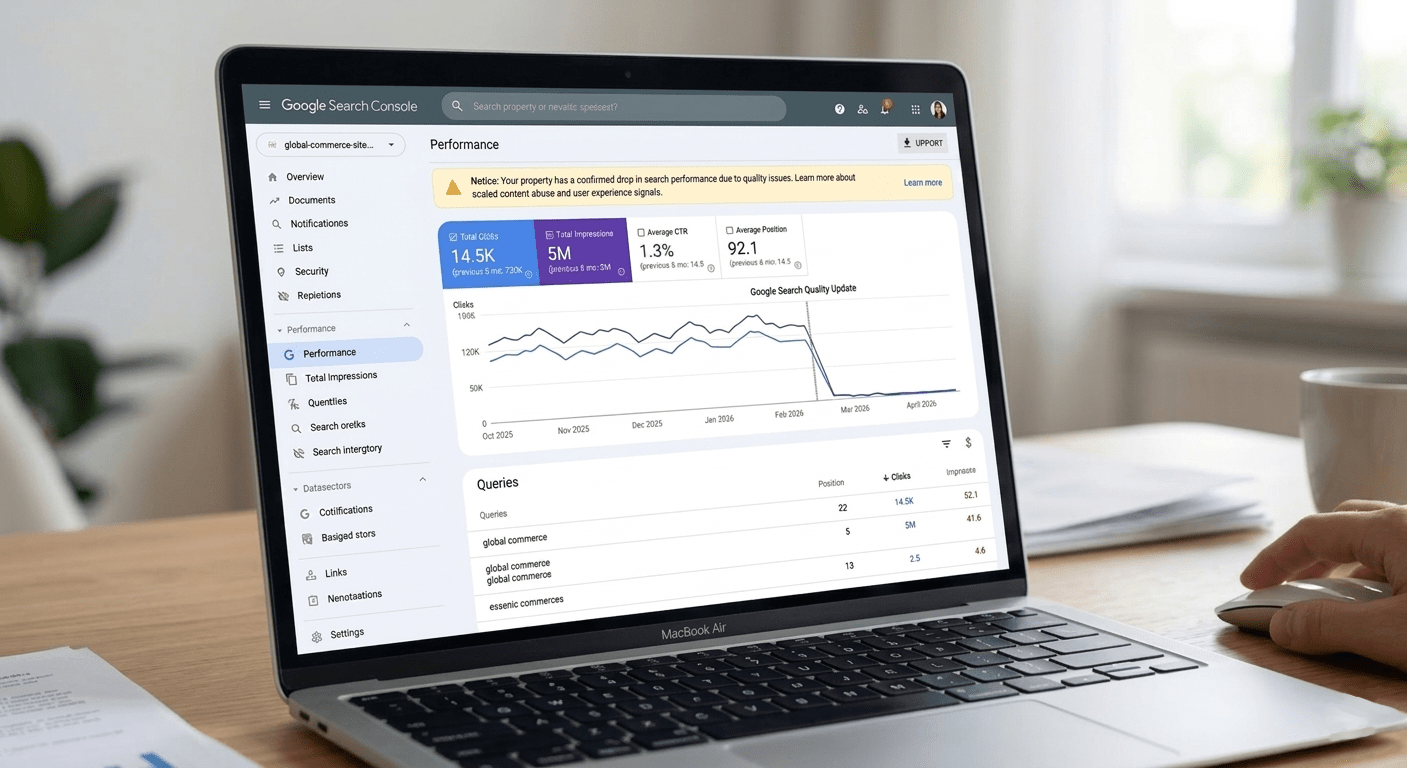
As global brands race to scale content across multiple markets, machine translation has become an attractive shortcut. It’s fast, inexpensive and seemingly ‘good enough’. However, when machine-translated blog posts and web content are published without human review, the consequences can be far more costly than expected.
Google has been increasingly clear: low-quality, unhelpful or misleading content – regardless of how it’s produced – will struggle to perform. This includes poorly machine-translated content that fails to meet user expectations.
Google’s view on machine-translated content
Google doesn’t penalise content simply because it’s machine translated. Rather, the problem arises when that content reads unnaturally, contains grammatical or semantic errors, lacks cultural context or fails to add genuine value for the user.
Google’s Helpful Content and Spam policies warn against scaled content generation that prioritises speed over usefulness (see think content below). Large volumes of unedited machine-translated pages often fall into this category.
The EEAT difference: machine output vs translator-led content
When it comes to Google’s ranking factors, the bar has moved from “can we read it?” to “can we trust it?” To understand why the choice between machine-only output and human-led translation is so critical, we first have to look at the yardstick Google uses to measure quality: E-E-A-T.
What is E-E-A-T?
E-E-A-T is an acronym used in Google’s Search Quality Rater Guidelines. It stands for:
Experience: Does the content show first-hand, real-world experience?
Expertise: Is the creator knowledgeable or credentialed in this specific topic?
Authoritativeness: Is the website or author a go-to source for this information?
Trustworthiness: Is the information accurate, safe, and honest? (This is the most important part of the puzzle!)
In the context of localization, E-E-A-T isn’t just about the facts – it’s about how those facts are presented to a local audience. Here is how the two different approaches to content creation stack up against these standards:
Poor machine-translated content and thin content
Unreviewed machine translation often lacks experience, expertise, authoritativeness and trustworthiness. Errors in terminology, awkward phrasing and generic language undermine credibility and user confidence.
There’s also the issue of information gain (IG) as set out in Google’s Helpful Content guidance linked to above.
Google now weights information gain heavily. If a machine-translated page adds nothing new to the web and is just a copy of another language’s page with no local context, it’s treated as thin content. To counter this, human review is a true value-add that can save your pages from the spam filter.
Translator-written or human-refined content (EEAT-aligned)
Content created or refined by professional translators and copywriters reflects local nuance, uses industry terminology correctly and aligns with brand tone. This type of content naturally satisfies EEAT expectations and performs better in search, engagement and conversions.
The financial impact: where the real cost appears
It’s tempting to think that “good enough” is a safe bet when you’re trying to move fast, but in the world of global growth, those small shortcuts can lead to some pretty big costs down the road. While a budget-friendly or automated fix might look like a win for your spreadsheet today, the cost of poor localisation has a way of catching up with you.
It’s about more than just a few clunky sentences; it’s about making sure your brand feels at home in a new market. When your message doesn’t quite land, you aren’t just losing words – you’re missing out on real connections and market share.
Here is how that impact usually shows up:
Loss of organic traffic
Search engines prioritize user experience and linguistic authority. Low-quality translated pages often fail to rank competitively, frequently drop after major algorithm updates and waste precious crawl budget. This effectively silences your brand in international markets, cutting off inbound demand before it even begins.
Lower conversion rates
Traffic is only a vanity metric if it doesn’t convert. Even when users arrive at your site, poorly translated content creates immediate cognitive friction. When a value proposition is clouded by awkward syntax or cultural tone-deafness, it confuses the buyer and signals that the product may be as unrefined as the copy.
Brand and reputation damage
In a global economy, trust is the primary currency. Errors in translated content do more than just look messy; they make a brand appear careless, unprofessional or even deceptive. This erodes the hard-earned confidence of customers, partners and regulators.
Why ‘fixing it later’ is rarely efficient
Businesses that plan to clean up machine-translated content later often face higher costs due to rewrites, SEO recovery work and the need to rebuild trust in affected markets.
A practical solution: partnering for quality translation
The most effective approach is not to reject technology, but to use it responsibly. A professional translation partner can combine machine translation with human post-editing, ensuring linguistic quality, cultural relevance, SEO alignment and EEAT compliance – for truly people-first translations that Google rewards.
Final thoughts: quality is a growth strategy
Google’s direction is clear: content must help users, demonstrate credibility and deliver value. Investing in quality translation protects rankings, revenue and brand reputation while supporting sustainable international growth.
